Waiting For Rock Bottom? Why You Don’t Have to Lose Everything to Get Help

There’s a dangerous idea floating around about mental health that’s centered on the belief that you have to hit rock bottom before things can change.
It sounds cinematic. Even motivating. It’s also very misleading and harmful.
If you’re struggling with substance use, burnout, depression, or feeling like you’re barely holding things together, you don’t need to wait until things fall apart.
You already qualify.
The ‘Rock Bottom’ Myth Is Costing People Time and Lives
Experts and advocacy groups actively challenge the idea that people need to lose everything before seeking help.
Waiting for “rock bottom” can increase the risk of long-term health damage and broken relationships.
Psychology Today advises that early intervention can largely reduce the severity of substance use disorders before they escalate. The earlier you act, the better your chances.
Addiction is Not Always Obvious
Addiction isn’t as crude as the Hollywood version. There’s no drug-induced overdose. No adrenaline jabs to the heart. No high-speed chases with the cops.
It can look like:
Still going to work but barely functioning.
Drinking or using “to take the edge off” every night.
Feeling anxious, numb, or overwhelmed without substances.
Telling yourself, “It’s not that bad… yet.”
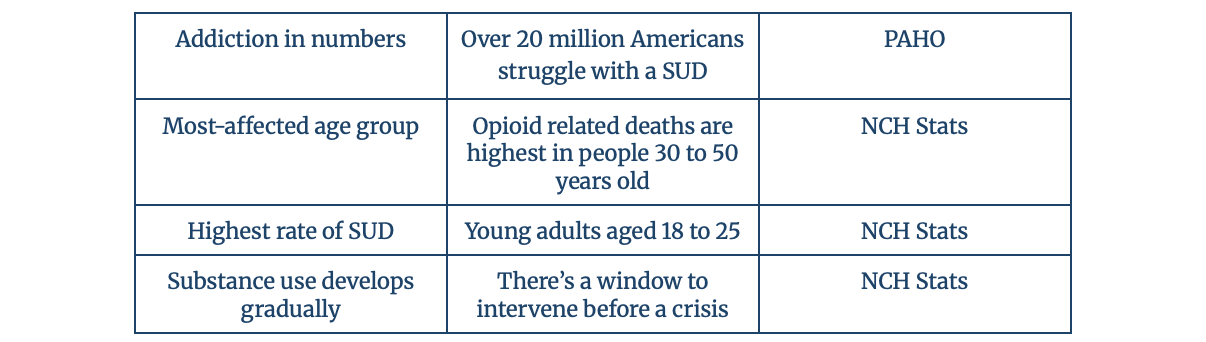
The Pan American Health Organization (PAHO) states that over 20 million Americans struggle with a substance use disorder (SUD), yet only a fraction receive treatment. It also identified drug use as one of the top ten leading risk factors for overall death and disability across the Americas.
A breakdown from NCH Stats shows that substance use can develop gradually, meaning there’s a long window where intervention can make a difference.
Why wait for “the worst case” to be taken seriously?
You Don’t Have to Do This Alone
One of the biggest changes happens when you stop trying to manage everything by yourself.
Structured support (outpatient counseling or a more immersive program) can give you tools that are hard to develop on your own.
And the best place to receive that support? Tucson, Arizona.
Documentary filmmaker Nick Johnson says that because the region borders Mexico, Tucson is fighting fire with fire. Tucson treatment center services are at the forefront of the city’s battle against substance use.
Patients receive individualized care. Treatment centers help people understand not just the behavior, but the why behind it. That kind of treatment gives you the best possible conditions to reset and rebuild.
In more intensive cases, Arizona rehab programs can provide structure, medical support, and space away from triggers.
You’re given the toolkit to aid your recovery. Evidence-based therapy. Outpatient services. Whatever it takes to promote long-term recovery, says Catalina Behavioral Health.
Breaking the Biggest Myths About Treatment
There are still misconceptions that keep people stuck. Some of the most common myths include:
You have to want help 100% for it to work
Treatment is only for severe addiction
Relapse means failure
None of these is true. Recovery is not one-dimensional. Motivation grows during treatment, not before it.
What Getting Help Can Look Like
If you’ve been imagining treatment as something extreme or intimidating, it might be simpler and more supportive than you think.
It could be:
Talking to a counselor for the first time
Joining a structured outpatient program
Entering a supportive residential setting
Learning how to regulate stress without substances
FAQs: Why You Don’t Have to Lose Everything to Get Help
1. Do I need to hit rock bottom before seeking help?
No. Early intervention leads to better outcomes and reduces long-term harm.
2. How do I know if I need treatment?
If your substance use or mental health is affecting your daily life, emotions, or relationships, it’s worth exploring support.
3. What if I’m still functioning normally?
Functioning doesn’t mean you’re OK. Many people seek help before things become severe and benefit from doing so.
4. What types of treatment are available?
Options range from therapy and outpatient programs to residential treatment centers, depending on your needs.
Key Statistics Summary
The Real Turning Point Isn’t Rock Bottom
It’s awareness. It’s that moment where you think: “Something isn’t right, and I don’t want to keep living like this.”
That’s enough. You don’t need to lose your job. You don’t need to lose your relationships. You don’t need to lose yourself.
You just need to take the next step.

MEET THE AUTHOR
Justine Carino
Justine is a licensed mental health counselor with a private practice in White Plains, NY. She helps teenagers, young adults and families struggling with anxiety, depression, family conflict and relationship issues. Justine is also the host of the podcast Thoughts From the Couch.
Recent Posts